With the shift in reading instruction toward the Science of Reading and explicit phonics instruction, many may find that comprehension has taken a backseat. In this post, I’ll be sharing four of my favorite reading strategies to support comprehension. After all, it is the ultimate goal of reading. In order to build lifelong readers, it is essential that students are provided with real reading opportunities to enjoy literature, engage in book discussions, and opportunities to write about their interpretations, opinions, and more.
To help you come up with easy to use activities that foster deep thinking, I thought I’d share a few comprehension activities and printables that you can use with any book. Having resources readily available makes a huge difference in planning and leads to thoughtful discussion.
Reading Strategies for Comprehension
Using Story Impressions for Making and Checking Predictions
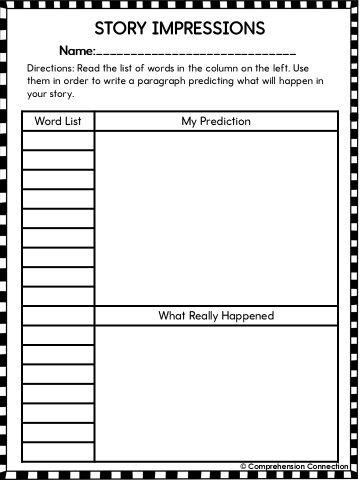
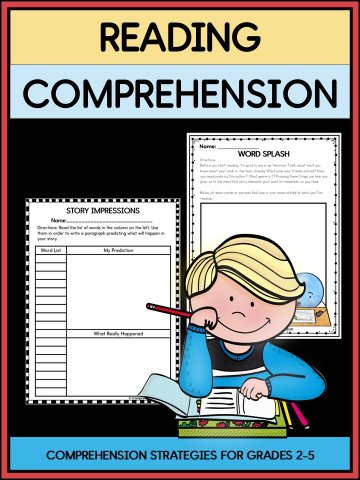
The first of the reading strategies I am going to share is a story impression. This strategy works well throughout the reading process with fictional books. Students are actively involved throughout the strategy process, and because students use their schema and vocabulary knowledge to predict, the strategy includes all skill levels. It hits the higher levels of Bloom’s Taxonomy, because students analyze the clues they’re given.
How to Use the Story Impressions Strategy
- Prior to the lesson time, select key words from the text and list them in the order they occur within the text. This can be done using this organizer, but it can also be placed on a SMARTBoard or a chalkboard to stimulate group discussion. You might have students pair/share their ideas based on the list.
- Students read the list of words and write a prediction statement using the words in the order presented. (Again, this can be done individually or collaboratively in cooperative groups.)
- Students read the assigned materials, checking their prediction statement as they read.
- After the reading is completed, students write a summary telling what really happened (which can be done individually or in cooperative groups).
Using a Word Splash to Deepen Reading Comprehension
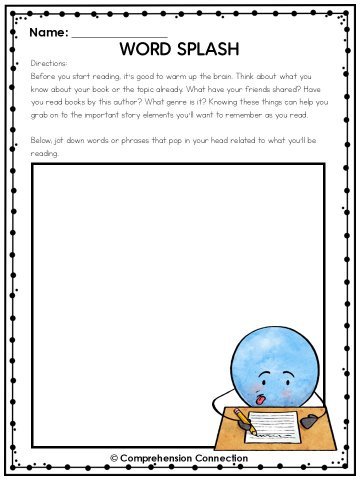
The second of my reading strategies is a Word Splash. Students can adjust the size of words to indicate their level of importance to the topic, too. The word splash shared here would work well with fictional books like Frog and Toad are Friends, with science in the study of life cycles, or with nonfiction pieces about frogs and amphibians. Creating word splashes are flexible, meaningful, and fun.
Another way to use word spashes is with writing. Students can work individually, in pairs, or in small groups to brainstorm words related to the topic or text to be written about. Word Splashes work well with nonfiction topics and fictional themes before, during, and after reading as new vocabulary is acquired. The beauty of the word splash is that the word list developed can be utilized with post-reading writing assignments too.
SQ3R, a Useful Strategy for the Content Areas & Nonfiction
In addition to these two strategies, another favorite of reading strategies is SQ3R. This one has been around a LONG time, but I am not sure how many teachers use it. The process follows the abbreviation, so students can quickly pick up on what to do.
How SQ3R Works:
- First, the student surveys the text and takes notice of headings and subheadings, pictures and captions, sidebars and diagrams, and any other text features included in the reading material.
- Next, the student creates questions utilizing the information observed in the survey. It is advised that students turn headings/subheadings into questions for the sections that follow.
- The third and fourth steps are to read the material and respond (I have revised the second R to be “respond” instead of what I originally learned – “recite”).
- Finally, after the reading is completed, the student reviews what was recorded. The Teaching Reef on Teachers Pay Teachers has a wonderful freebie listed for SQ3R I have found very helpful in my reading lessons.
Stop & Jot for Active Engagement
The last of the reading strategies for reading comprehension I’d like to share is the active reading process. You may have heard the terms Stop and Jot or Close Reading? No matter what you call it, close reading has been found to be very effective for engagement, retention of information, and study skills.
The Close Reading Process
The process I have used with my students is to have them box, underline, star, and label information as they read. If they are reading an article that can be written on, they use the margins to annotate their reading. This process is what students need to do to be able to add new information into their schema.
When I am teaching a reading skill, such as cause and effect relationships, I begin the process using a printable anchor chart (hard copy for students and projectable for my SMARTBoard). We mark what’s important on the chart, and then in small groups, students use sticky notes and our text marking strategies to engage with the text. Truly, this process is useful not only for reading groups. It’s important for lifelong learning. In fact, my own children use these reading strategies in college!
Other Comprehension Resources
-
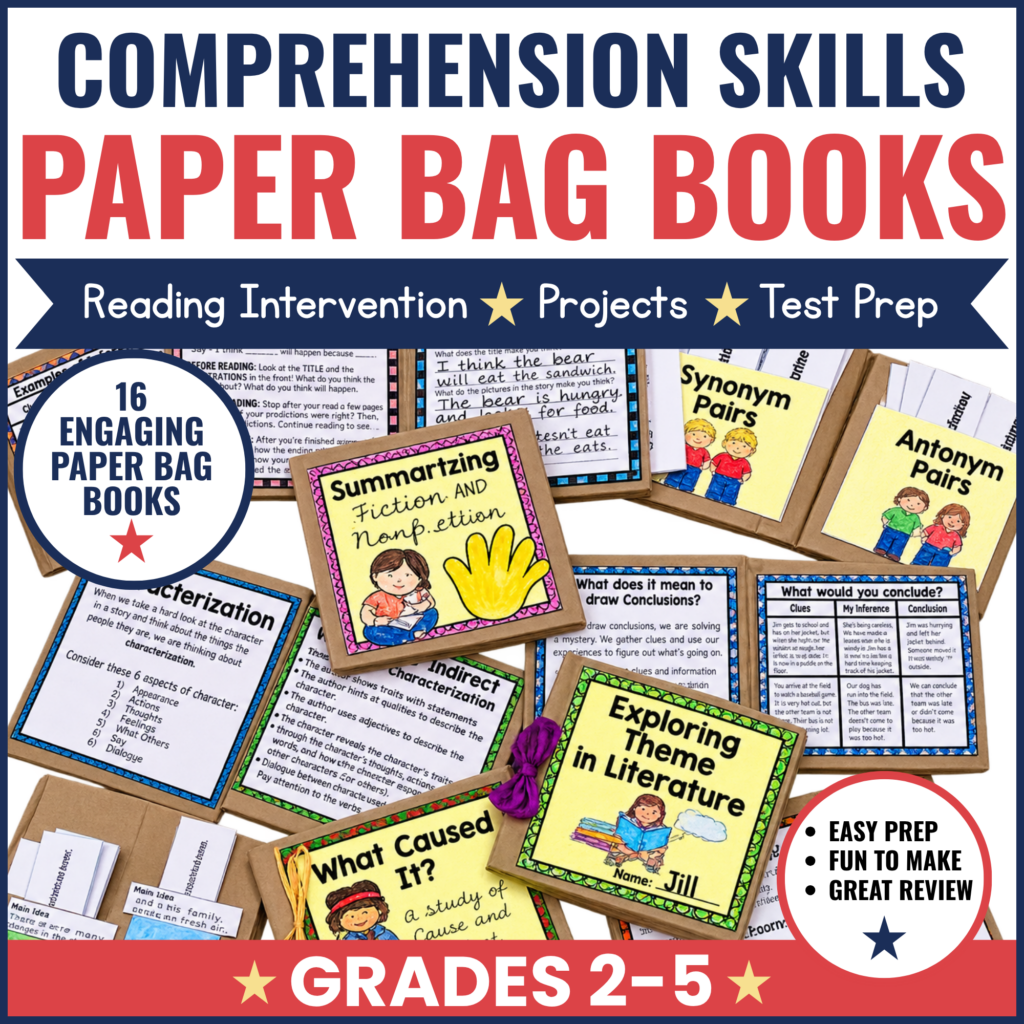
Comprehension Projects Bundle, Paper Bag Books, Test Prep, Intervention
Original price was: $64.00.$35.00Current price is: $35.00. -

Theme Project and Activities for Upper Elementary Reading Comprehension
$4.00 -
Fall Graphic Organizers for Reading Comprehension
$2.00


I believe that wraps things up on the reading strategies I included. Be sure you grab the free sample I linked above. You’ll get a copy of each of the organizers to use with your students. For other comprehension ideas or reading strategies, check out these helpful links:
- 5 Ways of Teaching Comprehension with a Science of Reading Frame of Mind
- 7 Creative Ways to Teach Reading in the Content Areas
- 5 Essential Skills to Teach For Comprehension Success
- 5 Ways to Improve Deep Thinking in the Classroom