Poetry can sometimes feel intimidating for students and even for teachers who are trying to fit it into an already packed literacy block. That’s why a Poem of the Week routine is such a powerful classroom strategy. With just a few minutes each day, students build reading fluency, strengthen comprehension skills, and develop a genuine love for language.
If you’re looking for an easy way to integrate poetry into your literacy instruction, I suggest compiling a Poem of the Week notebook with poems on a variety of topics. This allows you to pair every poem with related literature for your lessons. With poems that feature fun, relatable topics, students are immediately drawn into your lessons and can practice essential literacy skills.
Let’s take a look at how a Poem of the Week routine works and why it’s so effective.
What does a Poem of the Week Routine look like?
A Poem of the Week routine introduces students to a single poem that they revisit throughout the week. Each day focuses on a different literacy skill, allowing students to explore the poem more deeply with repeated reading and meaningful activities. Here’s what a typical weekly poem of the week routine might include:
- Monday – First Reading. Teacher reads the poem aloud, and students listen and discuss the overall meaning. The teacher also teaches unfamiliar vocabulary.
- Tuesday – Fluency and Rhythm. Students practice reading the poem aloud. They focus on phrasing, rhythm, and expression.
- Wednesday – Comprehension. Students analyze the meaning of lines or stanzas. As a group, you can discuss imagery, figurative language, or author’s message.
- Thursday – Word Work. Students identify rhyming words, phonics patterns, or syllables. You can also explore vocabulary and word choice.
- Friday – Extension Activities. Students can illustrate the poem and compare the poem to another text.
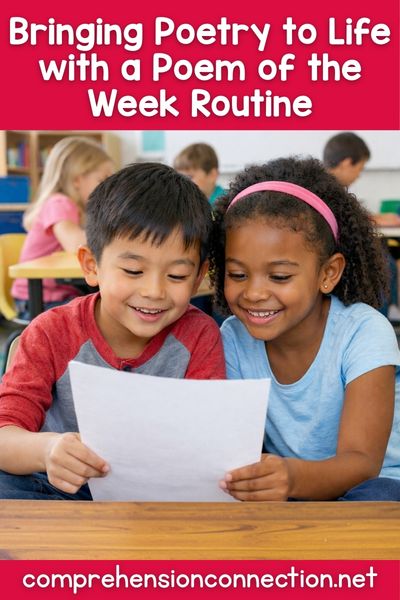
Using the same poem across several days allows students to build confidence and fluency through repeated reading, which is a proven way to strengthen reading skills.
Why a Poem of the Week Routine Is So Powerful for Young Readers
Poetry offers unique benefits that traditional passages often don’t. Short, rhythmic texts allow students to focus closely on language while practicing important reading strategies.
Here are a few reasons I think poetry deserves a regular place in your literacy routine.
- Improves Reading Fluency
- Because poems are short and rhythmic, they are perfect for repeated reading.
- Students naturally practice pacing, expression, and phrasing as they reread the selected poem during the Poem of the Week routine.
- Builds Vocabulary
- Poetry exposes students to rich language and descriptive word choices.
- Students see the words in context and can use context clues to grasp meaning and usage.
- Strengthens Memory and Confidence
- Many students enjoy memorizing poems and reciting poems aloud.
- The length of the text is s
- Encourages Creativity
- Poetry sparks imagination and helps students connect reading with art, movement, and creative expression.
- While reading poems, you might encourage students to write their own. You’ll be amazed at what they come up with.
Using Your Poem of the Week Routine to Teach Comprehension Skills
Poetry is an excellent tool for teaching reading comprehension because it encourages students to think deeply about language and meaning while not overloading them with a lengthy passage or story. Depending on the poem that you choose, the complexity can vary, but even with an easier to read poem, it is possible to think deeply.
Some comprehension skills work better than others. Here are a few I find that lend themselves to poetry.
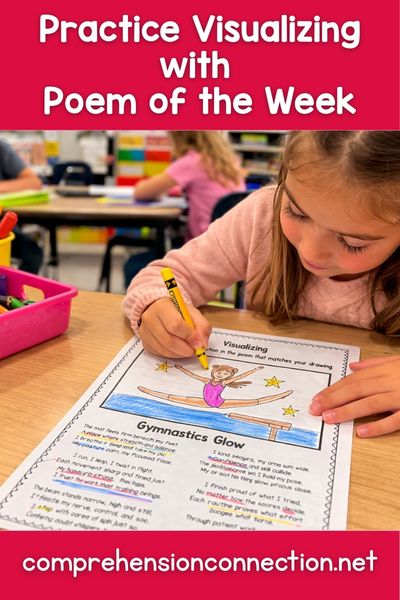
1) Visualizing
What I like to do with visualizing is have the students identify the elements from the poem that provide them with the clues to what they visualize. Students can box or underline them in the poem. Then, as they draw, label tho
2) Making Connections
No matter what the topic is of the chosen poem, students find connections. It may be related to their own experiences, other texts, or the world around them. As we work on poetry examples, I generally leave room in the margins for kids to record their connections as they read, but you can also use graphic organizers for recording too.
3) Determining Theme
Short poems provide great opportunities to discuss the author’s message and themes the author may be wanting students to learn. A poem may speak to perseverance and overcoming challenges, how to show respect to others, or may have themes related to friendship or hard work.
In addition to these particular comprehension skills, questioning is always important. Through questioning skills, you can work on finding text evidence to support your answer, analyze question types, or use questions to simply check understanding. Because poems are brief, students can reread and analyze the text multiple times for different purposes making them ideal for close reading lessons.
Using Your Poem of the Week Routine to Teach Phonics and Word Study
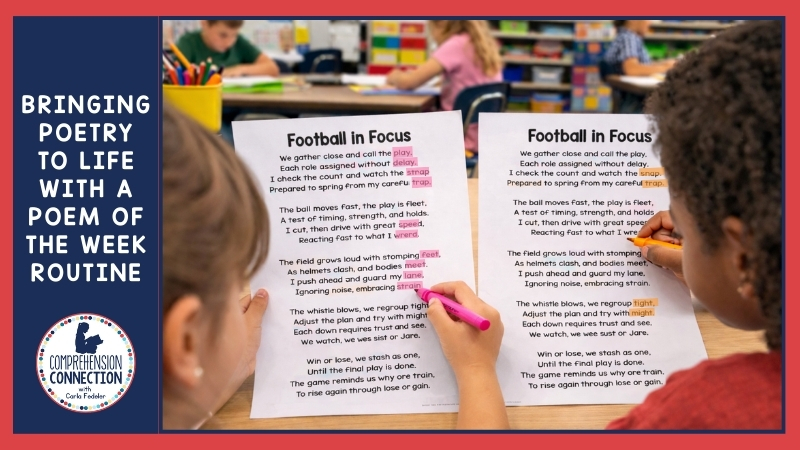
Poetry also works wonderfully for phonics instruction because it naturally highlights sound patterns. I love to have kids color code by spelling patterns or box rhyming words. There are so many hands on ways to work on phonics. Here are the examples of word work I include:
- Rhyming words
- Word families
- Syllable patterns
- Alliteration
- Long and short vowel sounds
- Prefixes and suffixes
Many poetry routines include activities like identifying rhymes, segmenting words, and practicing phonics patterns, helping students connect phonics skills directly to real reading experiences.
Fun Activities That Work Well with a Poem of the Week Routine
Poetry opens the door to many engaging classroom activities, and with your Poem of the Week routine, you can easily modify to choose different ways to use poetry. Here are some of the activities I’ve included:
- Artist Storyboard-Students draw a picture representing a line or stanza.
- Line Order Activity-Cut apart the poem and have students reconstruct it in the correct order.
- Poetry Performance-Students perform the poem using expression and movement. They might even act it out.
- Poetry Writing-Students write their own poem inspired by the week’s theme. I love this because it’s a great way to expand vocabulary. You might give students a word bank of vocabulary related to the theme.
- Poetry Centers-In centers, you can have students “Read, Write, Glue, and Draw” either the poem they’ve written or the poem you’ve chosen
Why Students Love Poem of the Week
One of the best ways to get students excited about poetry is to connect it to topics they already enjoy. I’ve written a collection of poems specifically geared to topics kids love. I have two sets with a sports theme and two with food themes. Themed poems tap into students’ interests while keeping reading fun and relatable.
With these topics, students can:
- visualize action and movement
- connect poems to real-life experiences
- stay engaged with the theme
I’ll link the sets I have to offer at the end of this post.
Related Posts You Might Check Out:
- 5 Ways to Put Pizazz into Your Poetry Lessons
- Building Poetry Pros in 3 Easy Steps
- 4 Simple Ways to Create a Positive Classroom Culture with Poetry
- How to Effectively Use Poem of the Week for More than Fluency
- 10 Fun Ways to Use a Poem of the Week
Bringing Poetry into Your Weekly Routine
A Poem of the Week routine is one of the easiest ways to incorporate poetry into your literacy block without needing a full poetry unit. In just a few minutes each day, students can build fluency, strengthen comprehension, practice phonics skills, and develop a lifelong appreciation for poetry. When the poems connect to exciting themes like sports, students are even more eager to read, analyze, and perform them.
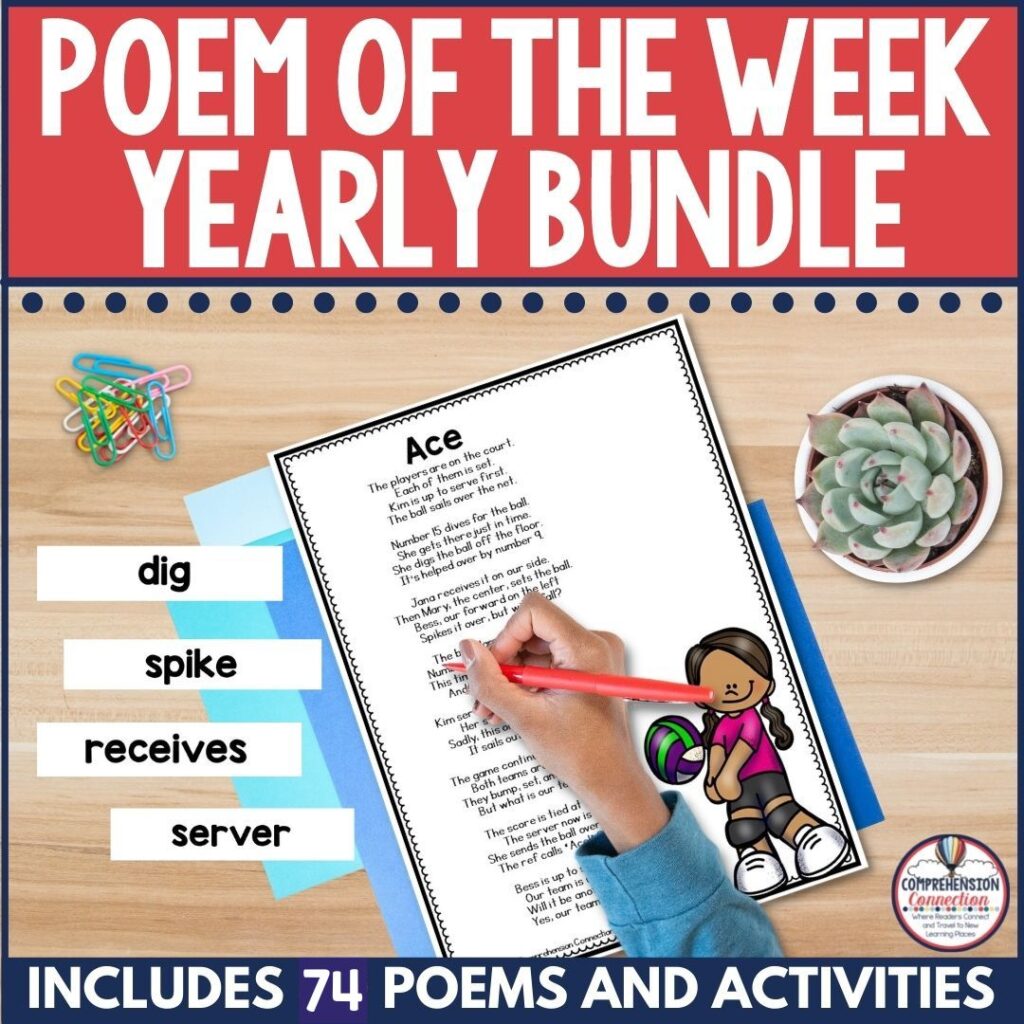
If you’re looking for an engaging and low-prep way to add poetry to your classroom, a weekly poetry routine might become one of your favorite literacy strategies. I’ve linked my full bundle on the right which now has 74 poetry sets including seasonal poems for Fall, Winter, Spring, and Summer, two food themed sets, and two sports themed sets plus anchor charts and organizers for poetic devices. Each poem comes with vocabulary cards and activities too.
-

Poem of the Week Food Poetry Cooking Poetry Fluency Activities
$5.99 -
Poem of the Week for Sports Fans, Sports Poetry, Sports Themed Poems
Original price was: $5.99.$4.00Current price is: $4.00. -
Spring Poem of the Week, Fluency Activities, Spring Poetry, Fluency Fun
$5.99 -
Summer Poem of the Week, Fluency Activities, Poetry Lessons, 2nd 3rd Grade
$5.99


I hope you’ll give Poem of the Week a try, and most of all, I hope your kids love it!