
We all have our favorite winter books we must read. Do you have a few winter favorites you enjoy teaching? You might love Katy and the Big Snow, White Snow, Bright Snow, Do you have a few winter favorites you enjoy teaching? You probably can rattle off a collection of titles from your childhood. Katy and the Big Snow, White Snow, Bright Snow, The Snowy Day, or The Mitten. How about chapter books? Mr. Popper’s Penguins, Balto, or Laura Ingalls Wilder’s book, The Long Winter. In this post, I want to share my favorite winter mentor texts. Having a collection gathered and marked with teaching points makes a huge difference in planning.
Winter Mentor Texts
Snowflakes Fall:
The first book, Snowflakes Fall, was written a few years ago for the children at Sandy Hook Elementary School (Can you believe it has been 10 years or so since we lost those sweet little children? My heart still aches for their moms and dads.) This book is just so eloquent, and I love how Patricia MacLachlan used just the perfect words to write this book.


This is the perfect book for teaching word choice and figurative language. I used this book as a patterned text for descriptive writing. The unit I developed focuses on comprehension and writing. I believe in connecting reading and writing. Readers need to read with a writer’s eye, and writers need to know how readers (their audience) think.
Snow:
In the fall, I always enjoy using the work of Cynthia Rylant with my students. Her books, Scarecrow and In November, are the two seasonal books for that time of year, but in the winter, I love her book, Snow. Descriptive writing is one type of writing I’m required to teach, so using this book to model how our words paint a picture. She says, “Snow comes quietly like a quiet friend.” Along with descriptive writing, we have to talk about how readers visualize as we read using sensory words. This one is definitely a must read.

Brave Irene:

Another skilled writer I love for winter is William Steig. Brave Irene is about a young girl who helps her sick mother by delivery a gown to the castle *as a blizzard rolls in*. It is a little far-fetched, but it works well for brave moment writing, but also character development and voice.
Snowflake Bentley:
As teachers of reading, we also need to remember to use a variety of texts. Snowflake Bentley by Jacqueline Briggs Martin is a great choice. It is a biography of William Bentley, a man whose fascination with and photography of snowflakes helped make discoveries of how snowflakes (crystals) form. It’s a very interesting book, and for this book, I created a set of interactive notebook and lapbook pieces that can be used to analyze book and demonstrate comprehension.

Additional Winter Resources
With my students, I also enjoy using the partner scripts, close reading articles, and author studies I’ve created too. Students love learning factual information, and since the majority of the material we’re reading to *learn* is nonfiction, students really need instruction on how to work with informational texts. These winter close reading sets were lots of fun for my students as we learned about these arctic animals while we broke down the information. This set includes five close reading sets about penguins, caribou, polar bears, walruses, and the arctic fox. They can be purchased as a bundle or individually.


Of course we can not go through the winter without enjoying books by Jan Brett. I could have highlighted any of her books in the Winter Mentor Texts section, and I don’t think you can go wrong with this set. Many of her books are best used in the winter, but there are a few which work well any time of year (Armadillo Rodeo, Town Mouse, Country Mouse, Annie and the Wild Animals, and Berlioz the Bear). For more details, you can look back at [this post].
Aside from books, poetry is perfect for those small moments during the day. I love using these poems to practice fluency, work on word study skills, and also comprehension. If you teach kindergarten or first, you might start with the Concept of Word set. These poems are four lines each and are intended to help students work on tracking print, build sight vocabulary, and practice decoding of CVC and CVCe words. The Winter poetry set works well with transitional readers and up.

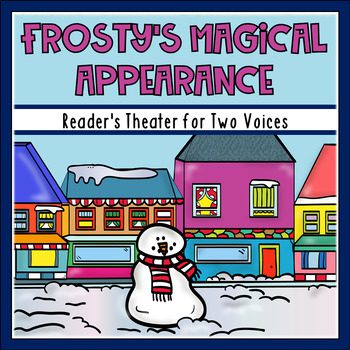
Finally, the activity I’ve enjoyed most with my students are these partner scripts. The kids really have a great time practicing them, but they also focus on comprehension strategies too. (finding details to support thinking, analyzing question types, making inferences, character development, plot, cause/effect relationships). Here are a few titles you might check out. The last is a free script for young readers (grades 1-3).


Winter is coming, and we may not love the cold weather and snow clean up, but we might as well make the best of it. Keeping your kids learning and growing with a wide variety of text options keeps them motivated and interested. What they don’t realize though is that they’re applying their learning in new and different ways.
See something in this post that you want to remember for later? Here’s a pin you can use to remember it.

Winter Resource Download:
Until next time, happy reading!





2 Responses
What a find on a wintry afternoon in Maine.
Great! I am so glad you enjoyed my post. :-))